01
Day one
Hong Kong
Sails 16:00
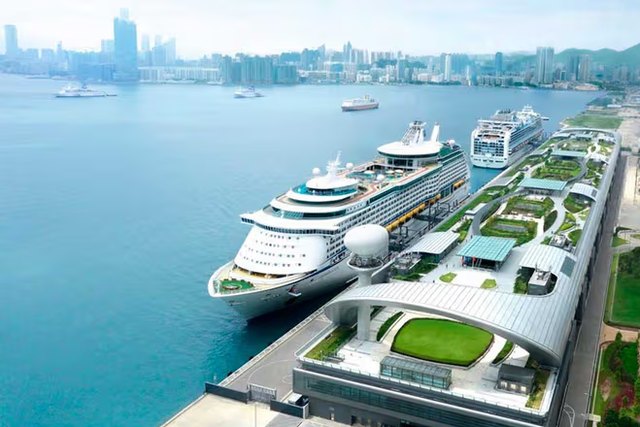
Boarding is at the Kai Tak Cruise Terminal, on the runway of the old airport. The ship sails at four, so the first evening is aboard.
Eight nights one way, ending in Tokyo. Korea on the fourth day, then three Japanese cities in four days — a first look at Japan that costs you no internal flights and unpacks once.
Every time on this page is ship’s time. It is set by the captain and does not always match the local clock — or your phone.
Four ports, three sea days, and about 2,300 nautical miles — one way. You fly home from Tokyo, not from Hong Kong.
Hong Kong is where you board and Yokohama where you leave — this sailing does not return. The line on the map is indicative; the course a ship actually steers is set on the day for weather and traffic.
Times are the ship’s scheduled arrival and departure and can move for weather or port traffic. All-aboard is normally 30 minutes before sailing.
Royal Caribbean has re-routed a number of Spectrum of the Seas sailings away from Japanese ports over the last year, substituting Korean ones. Three of the four calls here are Japanese. The line can change a port at any time and no cruise line guarantees its itinerary — if a particular place is the reason you are booking, tell us and we will say honestly how safe it looks.
Boarding is at the Kai Tak Cruise Terminal, on the runway of the old airport. The ship sails at four, so the first evening is aboard.

North overnight and up the Taiwan Strait. The first of two full days aboard, and on a ship this size that is not time to be endured — there is more on board than anyone gets through in a day.
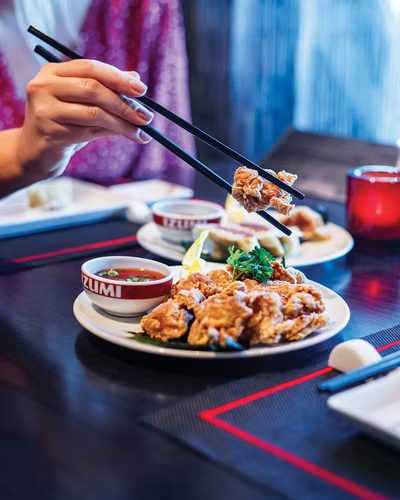
It is also the day to book whatever sells out: a table at one of the speciality restaurants, a show, a spa slot. Everyone else has the same idea on a sea day.
Out of the strait and across the East China Sea, running up towards the Korea Strait. Land is a long way off in every direction today.
Worth spending part of it working out what you want from the three port days ahead, because they come one after another with only one gap. The days ashore are short and the good things are not always near the berth.
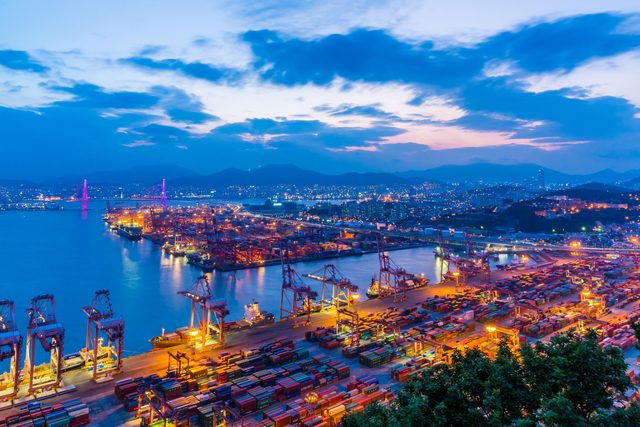
Korea’s second city and its largest port, wrapped around a harbour with mountains behind it. It is a working city rather than a museum piece, and the things worth seeing are spread out — which matters on an eleven-hour call.
The combination that fits is Jagalchi, the country’s biggest fish market and best early, with Gamcheon — a hillside of painted houses above the port — after it. Four to five hours, nothing to pay to get in. Haedong Yonggungsa, the temple on the cliffs, is the alternative rather than an addition: it is at the other end of the city and pairs badly with Gamcheon. Seoul does not fit at all — the fast train alone is over two hours each way.
Do not plan on walking into town. Busan has two cruise terminals and the large-ship one is on an island south of the centre with no walkable access, so budget 15–30 minutes each way by shuttle or taxi. Which berth a given call takes is not published; we confirm it with the line before you sail.
A separate country and a separate entry. Korea is not Japan for immigration purposes, and this sailing clears both — see Before you sail.
A 07:00 arrival is not a 07:00 walk-off. This is the first Japanese port, so every guest on board clears immigration in person — fingerprints and a photograph, no exceptions over sixteen. On a ship carrying nearly five thousand people that is a long queue, and it is the one morning not to book anything for half past eight.
After that, twelve hours — the longest call of the sailing, and it needs them. The berth is a genuinely good one: Matsugae terminal is a ten-minute walk from Glover Garden and five from a tram stop, and a ¥600 day pass covers the whole city. Of the four ports this is the only one you can simply walk off and use.
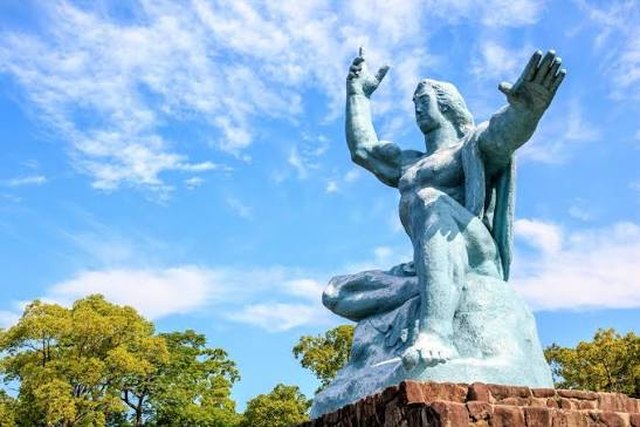
Nagasaki carries two histories at once. For more than two centuries it was the single place Japan permitted contact with the outside world — Dutch traders confined to Dejima, a fan-shaped artificial island in the harbour, while the rest of the country was closed. Much of what reached Japan from Europe came through that one gate.
The second history is 9 August 1945. The Peace Park, the Hypocenter and the Atomic Bomb Museum sit together north of the centre, about half an hour away by tram, and the museum costs ¥200. Give the three of them three hours, not one. It is a detailed and unflinching account, and worth knowing in advance if you are travelling with children.
Then walk the other history: Glover Garden on the hillside (¥1,300) and Oura Church beside it, Japan’s oldest, both a few minutes from the ship. That is a full day — roughly six hours ashore and about ¥2,500 in entries. Mount Inasa’s ropeway is the classic view but sunset is around half past five in January and the ship sails at seven, so it is tight.
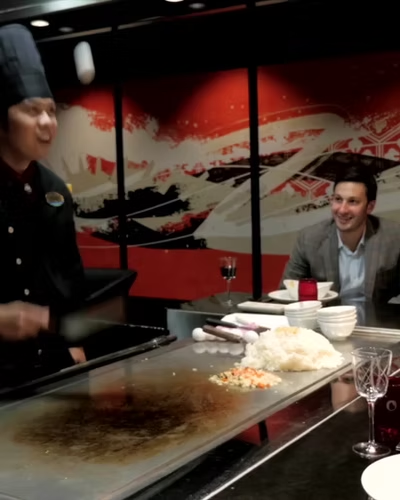
The last sea day, and a longer one than the map suggests. Rather than threading the Seto Inland Sea between the islands, the ship goes the outside way — south around Kyushu and Shikoku and east through open Pacific. It is roughly 200 nautical miles further and it is why this is a full day rather than a morning of coastline.
Use it to recover from Nagasaki and to settle whether Kyoto is happening tomorrow, because that decision has to be made before you wake up.
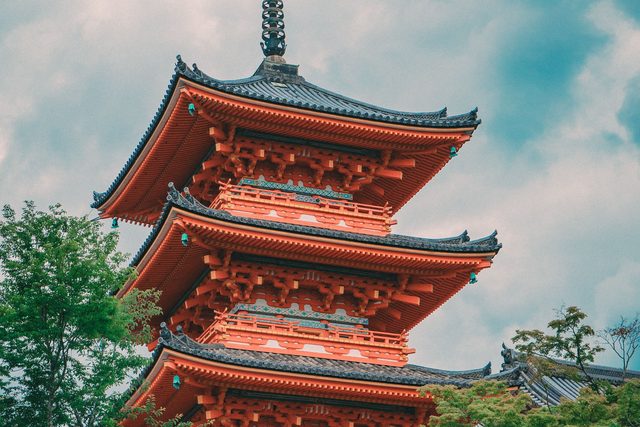
The shortest call of the four, and the earliest start. A driverless train runs from a station attached to the terminal into Sannomiya, the city centre, in about ten minutes for ¥210 — nothing is walkable from the berth itself, but the front door is very close.
Himeji Castle is what we would do with this day. Japan’s finest surviving castle, about 42 minutes from Sannomiya on a JR rapid train and a 15–20 minute walk at the other end. Roughly five and a half hours door to door, which leaves room for lunch back in Kobe. Admission rose to ¥2,500 for adults in March 2026; under-18s are free.
Kyoto is possible and we would talk you out of it. It is about 90 minutes each way door to door via the bullet train from Shin-Kobe, which leaves five hours in a city that deserves three days — and one missed train is a missed ship. If you go anyway, pick one of Fushimi Inari or Kiyomizu-dera and do not attempt both.
Staying in Kobe is a real choice rather than a consolation: the Kitano district of nineteenth-century foreign houses, Chinatown and Meriken Park are all walkable from Sannomiya, and the beef needs no introduction. Note that 9 January is a Saturday at the start of a Japanese long weekend, so Himeji and Kyoto will both be busy with domestic visitors.
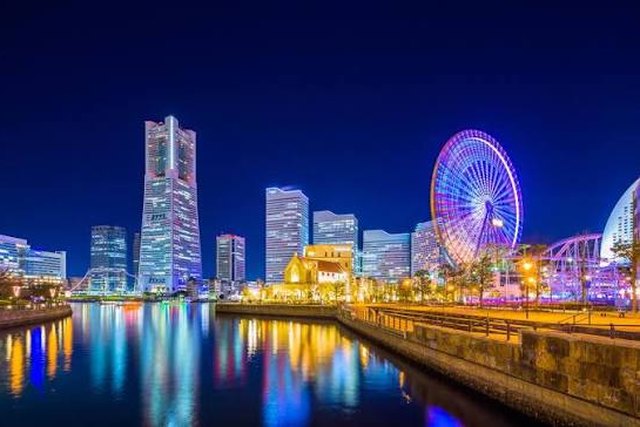
Into Tokyo Bay in the afternoon, and the ship stays the night. That last part matters more than it sounds: you get an evening in Japan without paying for a hotel, and you disembark rested rather than at dawn.
You berth at Daikoku Pier, and it is not the terminal you will find online. A ship this size cannot pass under the Yokohama Bay Bridge, so she docks on a man-made island outside it rather than at Osanbashi in the middle of town. Daikoku has no railway station and nothing within walking distance — getting ashore means the shuttle bus or a taxi. Search “Yokohama cruise terminal” and you will be shown the wrong one.
Allow for that and the evening is still worth having. Fifteen minutes by shuttle puts you at Yokohama Station or Yamashita Park, and from there Chinatown — the largest in Japan — the Red Brick Warehouse and the Minato Mirai waterfront are all close together. Tokyo is not an afternoon, though: you will be ashore around four and it is dark by half past, so save the city for a hotel night rather than trying to squeeze it in.
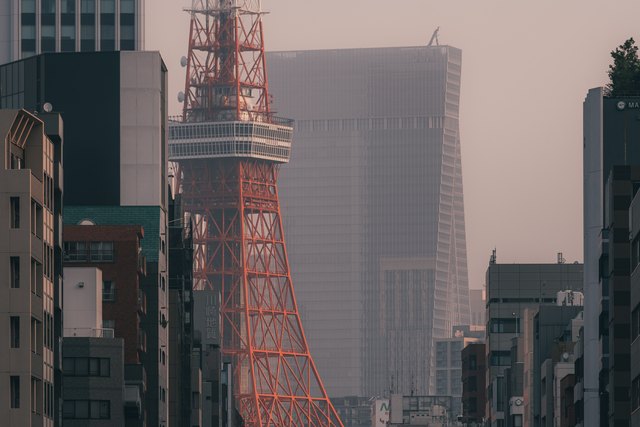
You leave the ship in Tokyo, not in Hong Kong — and the ship sails again the same evening, so everyone is ashore by the middle of the morning.
Neither airport is close, and Daikoku has no station. Everything routes through Yokohama Station first. Haneda is comfortable for an afternoon flight from about two o’clock; Narita is another 90 minutes to two hours on top of that and needs a departure of half past three or later. Nothing before noon at either works. We would put you in a hotel for the night instead — it costs less than the transfer stress and buys you Tokyo.
One thing worth knowing about this particular date: Monday 11 January 2027 is a Japanese public holiday at the end of a long weekend, so the roads into both airports will be busier than a normal Monday.
This is also the easiest place on the whole sailing to add days. You are already in Tokyo with your luggage; staying on for three or four nights costs a hotel and nothing else. We can book that, and the flights, as part of the same arrangement.
Nine grades on this ship. The gap between the cheapest and the dearest is wider than most people expect, and so is the difference in what you get.
Built for one and priced for one, without the single supplement that otherwise makes a solo booking cost close to two fares. No window, and small even by interior standards. It is much the cheapest way to sail alone on this ship. There are very few of them, they sell early, and none will take a second guest.
No window at all, and the cheapest way for two people to sail. Completely dark with the lights off, which some sleep better in and others find disorienting. Connecting pairs are sold as their own category and are worth asking about for two cabins travelling together. On a ship this size the walk out to daylight is long enough to matter.
An interior cabin with a floor-to-ceiling screen showing a live feed from a camera on the bow or the side. It gives you the time of day and the weather without paying for glass, and suits anyone who dislikes waking with no idea whether it is morning. It is a screen, not a view, and most people switch it off at night.
A sealed window, generally on a lower deck, and the cheapest way to have real daylight and a horizon - which matters more than it sounds if anyone in the party is prone to seasickness. A slightly larger Spacious Ocean View is sold alongside it. There are far fewer of these than balconies, so the choice of position is narrow.
The same single-occupancy deal with daylight and a real balcony, which is unusual - most ships that sell solo cabins sell them windowless. It suits someone travelling alone who wants outdoor space and will not pay a double fare for it. Still small, still strictly one person, and dearer than one share of a balcony cabin booked by two.
Private outdoor space, and much the most common cabin on board. Royal Caribbean sells four variants of it - obstructed, connecting, standard and one with a larger balcony - and the obstructed ones look onto a lifeboat or a structure rather than clear sea. The upgrade most people are glad of on sea days, and less compelling on a port-heavy run.
More floor area, a proper sitting area, a bath as well as a shower and a larger balcony. The thing to know is that it sits outside the Suite Club, so it buys the space and almost none of the privileges - no private restaurant, no suite lounge, no concierge. Judge it as a large balcony cabin rather than as a suite.
Spectrum's suites-only enclave, and the thing that most separates this ship from its Quantum-class half-sisters. Royal Caribbean describes it as private dining rooms, lounges and an upscale Solarium, with a private sun deck called The Balcony for Sky and Star guests. Grades run from a Sky Junior Suite through Grand and Owner's Suites to a loft. Suites carry a higher daily gratuity.
A multi-room suite built around children: Royal Caribbean's own copy names an in-suite slide and a private cinema that doubles as a karaoke room. It sleeps a large family and is the most expensive room on the ship by a wide margin, several times the next suite down. Worth naming to a family who would otherwise not think to ask, and to nobody else.
The things that cost money or cause trouble, in the order they are likely to. Everything here was checked against the cruise line’s own published terms in August 2026 — we confirm all of it against your specific booking.
Midship and low is the calmest ride. A ship pitches around its middle and rolls around its centreline, so the middle of the ship low down moves least. Forward and high is the worst combination.
A “guarantee” fare is a category, not a room. It saves real money and the line assigns your actual cabin whenever it likes — sometimes days before departure, sometimes with an obstructed view. Fine for a couple who do not mind. A poor choice if you are travelling with children, need a specific location, or are prone to seasickness. On some lines a family of four booked this way can be split across two cabins.
The fare you compare online rarely covers everything. Tick anything you want priced with the cruise — bought with the booking it is usually cheaper than on board, and you know the total before you go.
This one crosses three jurisdictions, not one. You board in Hong Kong, clear into South Korea at Busan and Japan at Nagasaki, and then leave through a Japanese airport rather than sailing back out.
That last part changes everything for a Cambodian passport. Japan does allow visa-required nationals ashore on a cruise without a visa — but only where the passenger returns to the ship, or is passing through Japan to somewhere else. This sailing ends in Japan, so neither applies. A Cambodian client is entering the country, not calling at it, and needs a Temporary Visitor visa. South Korea needs a short-stay visa for Busan as well.
And it bites at Nagasaki, not at Tokyo. The rule turns on where the voyage ends, not on which port you are standing in — so the visa has to be in hand for the first Japanese call on day five, four days before anyone disembarks. In practice it has to be held before you board at all, because the line checks documents at embarkation in Hong Kong.
We would rather say this plainly than have it discovered at the pier: a Cambodian passport holder cannot legally finish this cruise without a Japanese visa arranged in advance. There is no shore pass that covers it.
An Australian passport needs neither — 90 days visa-free in both countries. One thing to watch: Australia’s exemption from Korea’s K-ETA travel authorisation is currently set to expire at the end of 2026, and this call is in January 2027. It has been extended three times already and may be again, but we check it per booking rather than assuming.
We do Japanese and Korean visas ourselves. Tell us the sailing and which passports are travelling, and we will come back with exactly what each person needs and how long it takes — before you pay a deposit.
Your passport must be valid for at least six months beyond the date the cruise ends, and you need whatever visa each country on the itinerary requires — including a country you have no intention of getting off in. Immigration clears the ship, not the passengers who feel like going ashore.
Getting this wrong is the one mistake that can cost the whole holiday before it starts: the line can refuse boarding, and the fare is not refunded. It is also the passenger’s responsibility, not the cruise line’s.
You fly into Hong Kong and home from Tokyo. That is an open-jaw booking, not a return, and it is usually cheaper than two separate tickets — but it has to be booked that way from the start.
The upside is that a one-way sailing buys you a second destination for free. You are in Tokyo at the end with your luggage already there, so extra nights cost a hotel and nothing more. Most people who do this trip add three or four.
We book the flights, the hotel and the cruise as one arrangement.
That is the whole trade-off. An independent tour is usually cheaper and often better; a ship-booked one is insured against the traffic.
The other half of it is the clock. Excursion and all-aboard times are ship’s time, and your phone will not show it — it picks up the local network automatically, and the ship’s clock does not always follow. Set a second clock on your phone to ship’s time and use only that once you are ashore.
What we do: arrange a private guide with a written return-by time and a local number that reaches a person. Cheaper than the ship’s coach, and somebody is accountable for getting you back.
Royal Caribbean charges an automatic daily gratuity to your onboard account, for every night, for every guest — children included. As at August 2026 it is US$18.50 per person per night, or US$21.00 in a suite.
Separately, 18% is added to every drink, speciality meal and room-service order, and 20% to the spa. A couple who drink should budget meaningfully above the fare.
You can prepay it, which locks the rate against an increase — three lines raised theirs in the last six months. You can also adjust it at guest services before you disembark, but not afterwards.
A deposit holds the cabin; the balance falls due 90 days before sailing on a cruise of this length. Miss that date and the booking can cancel itself into penalty.
Those are percentages of the total price, not of the deposit. Ask us for the refundable deposit if there is any chance your dates move — it costs a little more and is usually worth it.
Many standard travel policies exclude medical treatment beyond a set distance from land — which is exactly where you are on a sea day — and cap or exclude evacuation from a vessel. Helicopter evacuation from a ship runs into six figures.
Buy a policy with explicit cruise cover, and buy it on the day you pay the deposit, not before you fly. Cancellation cover only works if the policy is already in force when the thing that cancels your trip happens — and the penalties above start biting three months out.
Check the evacuation limit as a number. “Unlimited medical” does not always mean unlimited evacuation.
Do not fly in on the day you sail. A delayed flight becomes a missed cruise, and a missed cruise is not refunded. Fly in the night before at the very least.
Check-in is online and closes at 8am on the morning of sailing. You must be checked in and aboard no later than 90 minutes before the ship’s departure or you will not sail.
We can hold a Hong Kong hotel room the night before as part of the booking.
You will have been given an arrival window at check-in — keep to it, because guests who turn up early are not boarded early, and guests who turn up late wait for a later group.
Once aboard, find your muster station before anything else. The drill is two steps now: watch the safety briefing on the app or your cabin television, then go in person to the station printed on your card and have it scanned. Both have to be done before the ship sails.
Seasickness is a smaller problem than most people expect — about one in ten visits to a ship’s medical centre. Slips and falls, and ordinary coughs and colds, are both more common.
If you are susceptible: take something before you sail rather than after symptoms start, pick a cabin midship and low, and get where you can see the horizon. This route is sheltered by comparison with open ocean, and a ship this size moves very little.
The medical centre is an urgent-care clinic, not a hospital, and it is not free — consultations and medicines are charged. Bring your own of anything you take regularly.
Tell us how many of you there are. We will come back with the four cabin grades in US dollars, the total including gratuities, the open-jaw flights into Hong Kong and home from Tokyo, and what the Japanese and Korean visas will take — before you commit to anything.
Get a price→Tell us who is travelling and we will come back with the cabin grades in US dollars, the total including gratuities, and what the visas will take — before you commit to anything.
If you do not hear from us, email info@dltravel.net and we will pick it up.