Cruise · New Zealand

New Zealand, nine nights

Nine nights round trip from Sydney aboard Anthem of the Seas, calling at Wellington, Napier, Tauranga and Bay of Islands. Four days at sea.

Fare
From A$2,049
Seven cabin grades on this ship. That is per person on twin share, and does not include flights. This is a public lead-in fare read in August 2026, not a quote — cruise fares move daily and differ by market, so we confirm yours against live availability before you commit. Taxes and port fees are already in it; gratuities are not, and are set out below.
Ship
Line
Royal Caribbean
Departs
Sydney
Sailing date
12 February 2027
Nights
9
Ports
Wellington, Napier, Tauranga and Bay of Islands
Sea days
4

At a glance

Every time on this page is ship’s time. It is set by the captain and does not always match the local clock — or your phone.

The route

Four ports, and four days at sea. You end where you started.

Sydney is where you board and where you return. The line on the map is indicative; the course a ship actually steers is set on the day for weather and traffic.

Day by day

Times are the ship’s scheduled arrival and departure and can move for weather or port traffic. All-aboard is normally 30 minutes before sailing.

01
Day one

Sydney, Australia

Embark
Sails 17:00
Sydney
Sydney

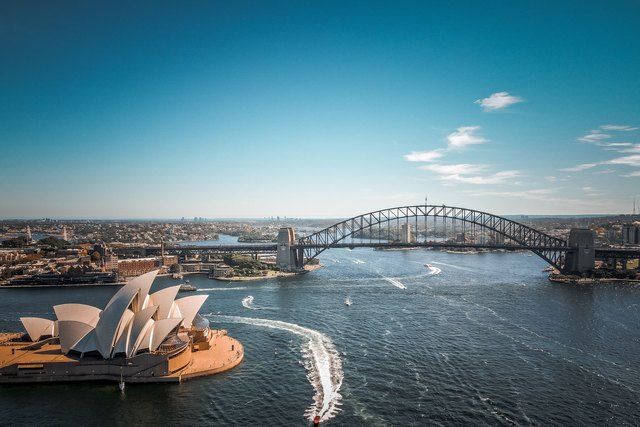
The Overseas Passenger Terminal is at Circular Quay, a few minutes' walk from the Opera House and the Rocks; ships too tall to pass under the Harbour Bridge berth at White Bay instead, which needs a taxi or a shuttle. She sails at five in the afternoon, so the first evening is aboard. Which terminal you get is decided by your ship's height rather than your fare, and it changes every transfer for the day.
02
Day two

At sea

Sea day

The first of four days at sea. She is running for Wellington. Everything on board is open and the day is yours to spend on it.

03
Day three

At sea

Sea day

The second of four days at sea. She is running for Wellington. Everything on board is open and the day is yours to spend on it.

04
Day four

Wellington, New Zealand

In port
Arrives 10:00
Sails 18:00
Wellington
Wellington

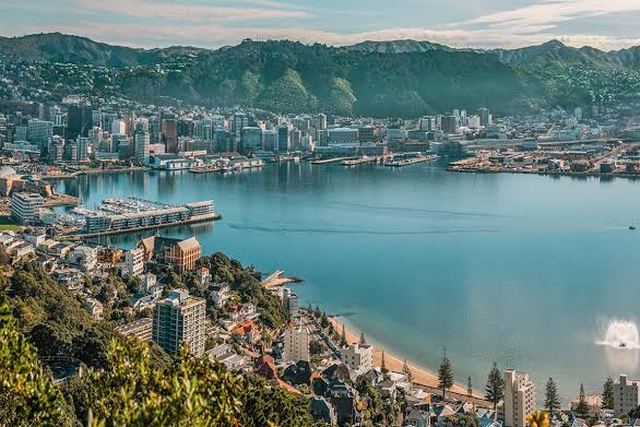
Wellington is small, walkable and better than its size suggests. Te Papa on the waterfront is the national museum, free to enter and genuinely good on the country's own history. The cable car climbs from Lambton Quay to the botanic gardens, and the walk back down through them is the standard route. Cuba Street is the coffee and second-hand end of town. Film studio tours are the other draw and are out in the suburbs. Most ships use Aotea Quay, about two kilometres from the centre with a shuttle running in; smaller ships sometimes get a berth on the waterfront itself. Wellington is exposed to Cook Strait weather, and calls here are sometimes cancelled for wind.

05
Day five

Napier, New Zealand

In port
Arrives 07:00
Sails 16:00
Napier
Napier

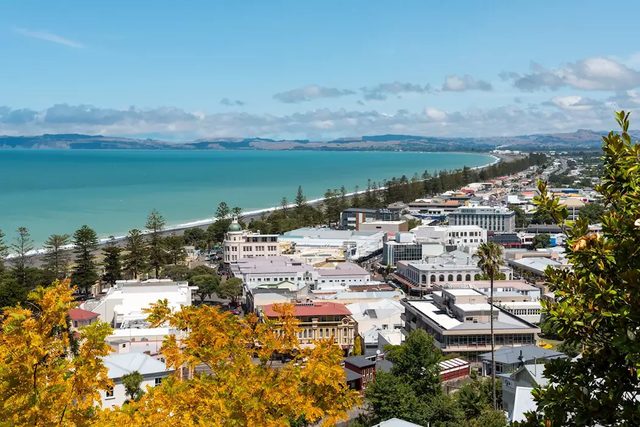
Napier was levelled by an earthquake in 1931 and rebuilt at once, which is why the centre is a compact grid of Art Deco built in a single period. It is small enough to walk and the detail is in the shopfronts and parapets rather than in any one building. Marine Parade runs along the shingle beach. Hawke's Bay wine country is a short drive out, and the gannet colony at Cape Kidnappers is further. The berth is inside a working commercial port with no pedestrian route out, so a shuttle or a booked transfer is the only way into town, which is a short ride away. You cannot walk out of the port, so the day depends entirely on the shuttle or on transport arranged in advance.

06
Day six

Tauranga, New Zealand

In port
Arrives 10:45
Sails 17:45
Tauranga
Tauranga

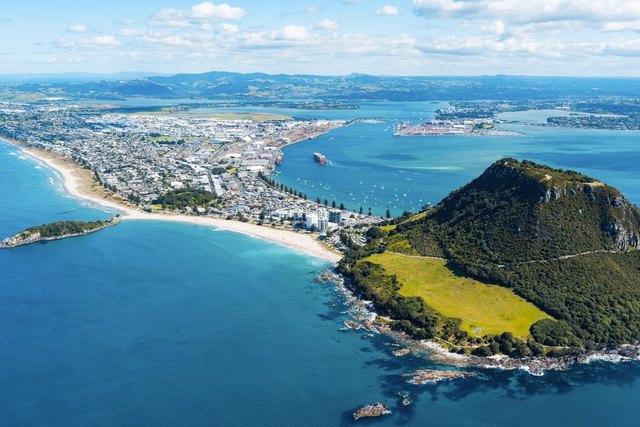
Two different days come off this berth. Stay at the Mount and you can climb it in about an hour for the view down both sides of the sandbar, swim the surf beach, or walk the flat track round its base. Or drive inland to Rotorua for the geothermal parks, the bubbling mud and a Maori cultural performance, with the sulphur smell that comes with the place. Hobbiton, the film set on a working farm, is the other inland option. Ships berth at Mount Maunganui, a short walk from its beach, shops and the hill itself; central Tauranga is across the harbour. Rotorua is around an hour each way and Hobbiton further, so either one takes the whole day.

07
Day seven

Bay of Islands, New Zealand

In port
Arrives 08:00
Sails 17:00
Bay of Islands
Bay of Islands

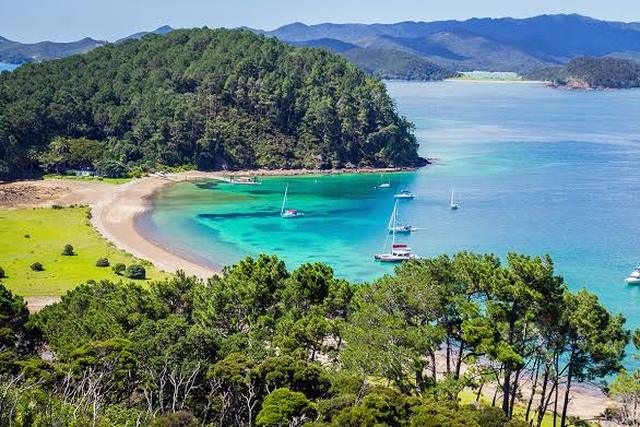
The Waitangi Treaty Grounds are next to the tender landing: the place the treaty between Maori and the Crown was signed in 1840, with a carved meeting house and a very large war canoe, and it is the most substantial thing here. Boats out to the Hole in the Rock and to look for dolphins leave from Paihia. The passenger ferry crosses to Russell, the country's first capital and now a quiet waterfront village. The ship anchors in the bay and tenders to Waitangi wharf, with a shuttle or a 20 to 25 minute waterfront walk into Paihia. Bay of Islands is a tender call - the ship anchors off Waitangi/Paihia.

08
Day eight

At sea

Sea day

The third of four days at sea. She is running for Sydney. Everything on board is open and the day is yours to spend on it.

09
Day nine

At sea

Sea day

The fourth of four days at sea. She is running for Sydney. Everything on board is open and the day is yours to spend on it.

10
Day ten

Sydney, Australia

Disembark
Arrives 06:30
Sydney
Sydney

The cruise ends here and you disembark in the morning. The Overseas Passenger Terminal is at Circular Quay, a few minutes' walk from the Opera House and the Rocks; ships too tall to pass under the Harbour Bridge berth at White Bay instead, which needs a taxi or a shuttle. Which terminal you get is decided by your ship's height rather than your fare, and it changes every transfer for the day.
Choosing a cabin

Seven grades on this ship. The gap between the cheapest and the dearest is wider than most people expect, and so is the difference in what you get.

Interior cabins2 grades · from A$2,048

Studio Interior

Ask us

A solo cabin sold without the single supplement, of which there are twenty, each with a virtual balcony in place of a window. Around ten square metres, so genuinely tight. It is the cheapest way onto this ship by a distance if you are travelling alone, and it cannot take a second guest at any price.

Interior Stateroom with Virtual Balcony

From A$2,048

The same interior cabin with a full-height screen showing a live camera feed from outside. It answers the one thing an interior cabin cannot - what time of day it is and what the weather is doing - for a good deal less than a window. Nobody mistakes it for a view, and it switches off.

Ocean view cabins1 grade · from A$2,198

Ocean View

From A$2,198

A fixed window that does not open, mostly on the lower decks. Real daylight and a real horizon, which helps anyone who feels the movement; a fixed point outside settles the inner ear in a way a screen does not. There are relatively few of them on a Quantum-class ship, so they are worth asking about early.

Balcony cabins2 grades · from A$2,198

Studio Ocean View Balcony

Ask us

The same solo deal with a real balcony rather than a screen, and there are only eight on board. Worth knowing about, because most ships that sell single cabins sell them without a window at all. Still around ten square metres, still strictly one berth, and dearer than one person's share of an ordinary balcony cabin booked by two.

Superior Ocean View Stateroom with Balcony

From A$2,198

The standard balcony and the default cabin on this ship. Outdoor space of your own, which changes a sea day completely, and the grade we would point most people at first. On a northern European or transatlantic sailing the weather may mean you use it far less than you imagined when you booked it.

Suites2 grades · from A$5,248

Junior Suite

Ask us

A larger cabin with a separate sitting area, a bath, and a bigger balcony. It is not part of Royal Suite Class, so it carries none of the suite dining, lounge or concierge access - a distinction that catches people out regularly, because the word suite is in the name. Good value read as a big cabin.

Suite (Royal Suite Class)

From A$5,248

Sea, Sky and Star tiers, separated mainly by what they let you into rather than by floor area: a private restaurant, a lounge, a concierge and priority everything, with an attendant at the top tier. Floor plans run from a one- bedroom Grand Suite to a loft. The daily gratuity is charged at the higher suite rate.

Two things worth knowing before you pick

Midship and low is the calmest ride. A ship pitches around its middle and rolls around its centreline, so the middle of the ship low down moves least. Forward and high is the worst combination.

A “guarantee” fare is a category, not a room. It saves real money and the line assigns your actual cabin whenever it likes — sometimes days before departure, sometimes with an obstructed view. Fine for a couple who do not mind. A poor choice if you are travelling with children, need a specific location, or are prone to seasickness. On some lines a family of four booked this way can be split across two cabins.

What this fare covers

The fare you compare online rarely covers everything. Tick anything you want priced with the cruise — bought with the booking it is usually cheaper than on board, and you know the total before you go.

Usually in the fare
  • Your cabin, and the main dining rooms and buffets
  • Most onboard entertainment — shows, pools, gym and kids’ clubs
  • Tea, coffee, water and basic juice with meals
  • Port taxes and fees, where they are shown at booking
Usually charged separately
Passports and visasWorth reading

Australia. Cambodian passport: Visitor visa (subclass 600), Tourist stream, applied for from outside Australia. Not eligible for the ETA (subclass 601), whose eligible passports are Brunei, Canada, Hong Kong SAR, Japan, Malaysia, Singapore, South Korea, Taiwan and the United States; not eligible for eVisitor (subclass 651), which is for European passports. Home Affairs states the subclass 600 Tourist stream covers going on a cruise. Australian passport: Australian citizens have a right of entry to Australia and hold no visa. Home Affairs states that Australian citizens are ineligible to apply for an ETA and directs them to Entering Australia instead.

New Zealand. Cambodian passport: AN NZeTA, NOT A VISITOR VISA -- and this is the finding most likely to be got wrong, because Cambodia is not a New Zealand visa-waiver country. Being a cruise passenger is an independent basis. Immigration New Zealand's operational manual E2.1, 'People to whom a visa waiver applies', lists 'cruise ship passengers' as its own category with no nationality qualification, and the NZeTA page lists 'arriving on a cruise ship or cargo ship as a passenger' as an eligibility category separate from being a citizen of a visa waiver country. Note this holds because these sailings are round trips that leave New Zealand again -- a client intending to disembark and stay is a different case entirely. Australian passport: Immigration New Zealand: 'Australian citizens and permanent residents travelling on an Australian passport do not need a visa or an NZeTA to enter New Zealand.' New Zealand Customs states the same from the other side -- travellers who are not New Zealand or Australian passport holders must hold a current visa or NZeTA.

Checked 2026-08-12. Immigration rules move, so we re-check yours when you book — and we arrange the visas ourselves.

Gratuities and what the fare leaves outWorth reading

The fares above include taxes, fees and port expenses. The line charges an automatic daily gratuity to your onboard account, and drinks, specialty dining and shore excursions are extra. We set the whole total out for you before you pay a deposit.

Insurance, and why the ordinary policy is not enough

Many standard travel policies exclude medical treatment beyond a set distance from land — which is exactly where you are on a sea day — and cap or exclude evacuation from a vessel. Helicopter evacuation from a ship runs into six figures.

Buy a policy with explicit cruise cover, and buy it on the day you pay the deposit, not before you fly. Cancellation cover only works if the policy is already in force when the thing that cancels your trip happens — and cancellation penalties on a cruise typically begin months before departure, not days.

Check the evacuation limit as a number. “Unlimited medical” does not always mean unlimited evacuation.

If you have not cruised before

Seasickness is a smaller problem than most people expect — about one in ten visits to a ship’s medical centre. Slips and falls, and ordinary coughs and colds, are both more common.

If you are susceptible: take something before you sail rather than after symptoms start, pick a cabin midship and low, and get where you can see the horizon. This route is sheltered by comparison with open ocean, and a ship this size moves very little.

The medical centre is an urgent-care clinic, not a hospital, and it is not free — consultations and medicines are charged. Bring your own of anything you take regularly.

Shall we price it for you?

Tell us how many of you there are. We will come back with the cabin grades, the total including gratuities, and what the flights and any visas will take — before you commit to anything.

Enquire about this sailing

Enquire about this sailing

Tell us who is travelling and we will come back with the cabin grades in US dollars, the total including gratuities, and what the visas will take — before you commit to anything.

How should we reply?